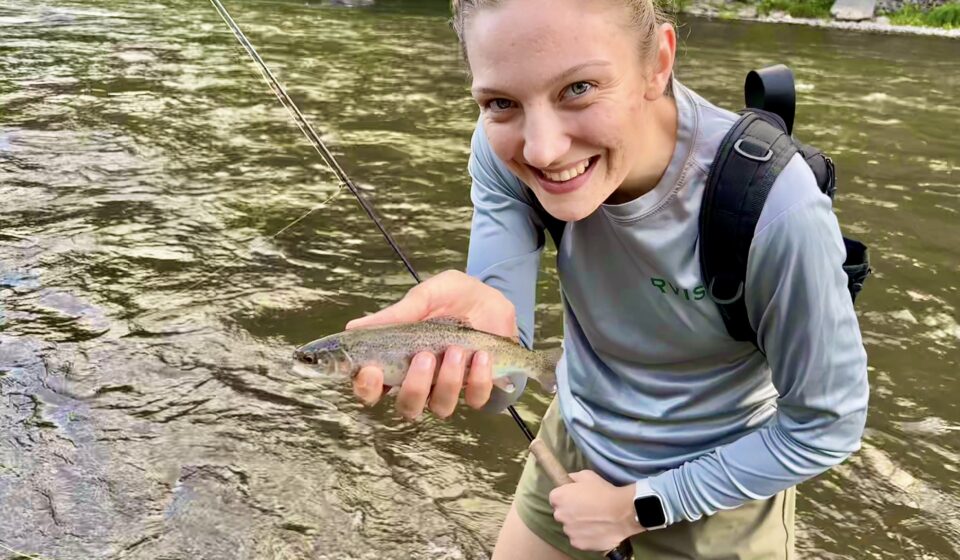

The number of women in fly fishing is constantly expanding. With so many women-oriented fly fishing groups, such as United Women on the Fly, in the fold, there now exists a fantastic runway for women to get involved in the sport.
Table Of Content
Additionally, existing non-profit organizations, such as Trout Unlimited, are increasingly endorsing and hosting introductory events for women in fly fishing.
As someone with several strong female individuals in my life, I have attempted to foster any interest in fly fishing I can. After introducing my partner, Amanda, to the sport several years ago, I have now worked in conjunction with her to teach several of our peers.
Recently, we took a trip to the Catskills Mountain Range in New York for a quintessential fly fishing experience. None of us were disappointed, and everyone walked away from the river with a smile on their face.
Teaching the Cast
It all started on a rainy day in June, 2025. Amanda and I ran a fly fishing clinic for eight of our local friends. Despite the rain, everyone had a great time casting and learning the basics. The real fun came on the water.
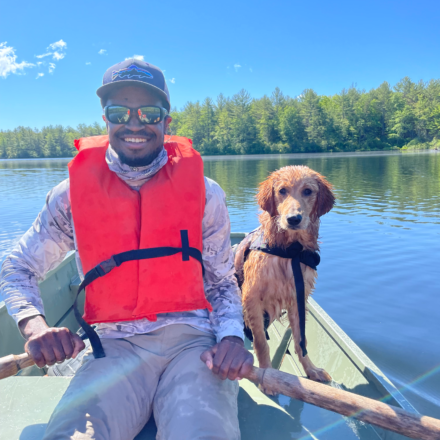
I took a couple of our friends out on my boat in pursuit of panfish and bass later that week. I think we can all agree that it was one of the best days of the summer. Each lady caught at least ten fish. The action was constant, and the smiles were wide.
One of those friends has access to a cabin in the Catskills. After she was literally hooked on the sport following that day of lake fishing, there was no question of where we were going to fish next.
The Cabin
The cabin in question is situated right on the Esopus Creek in the Catskills. The Esopus affords anglers a quality wild trout fishery, providing a nice break from the stocked streams of southern New England.
With such a beautiful fishery at our fingertips, it was my mission to make sure everyone caught fish. Those who know me know that my passion for watching others enjoy success in fly fishing runs very deep.
Upon arriving at the cabin, we made a plan for fishing each day. It was music to my ears to hear the excitement from beginners and seasoned veterans alike.
Dipping Our Toes
On day 1, we arrived at a section of the Esopus that looked about as fishy as any piece of water I have ever come across. It featured beautiful seams, shallow riffles, and excellent structure that are enough to make any trout fisher salivate.
Stepping into the water furthered the excitement. Anytime you can feel the chill of a crisp river in late July, you know you’re likely in for solid fishing.
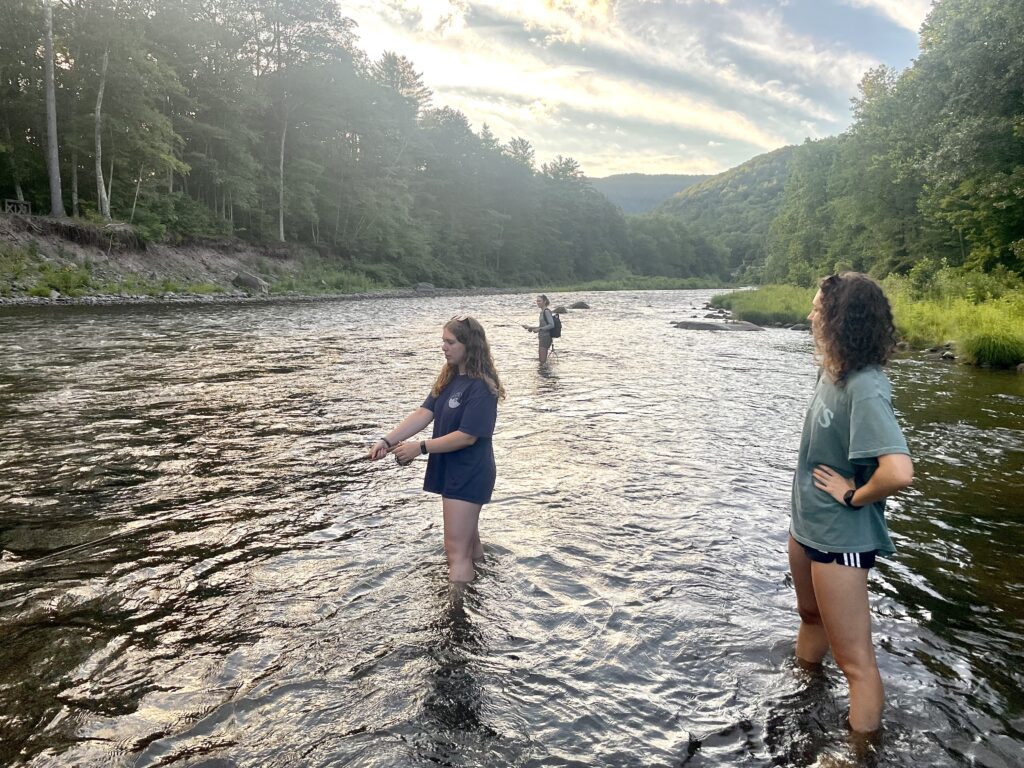
The first 30 minutes were quiet as we probed the water with both dry flies and nymphs in an attempt to discover what the fish were eating. The excitement went through the roof once Amanda yelled, “Fish on!”
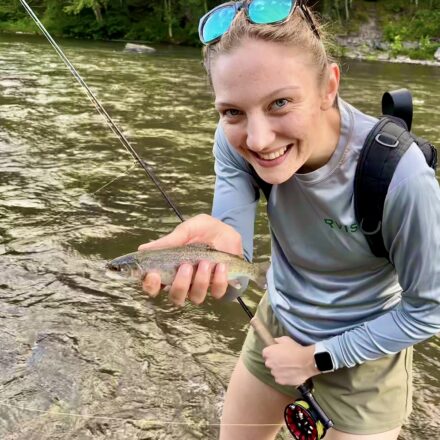
Amanda had hooked a beautiful rainbow trout on a massive stone fly nymph. That fish was clearly in its bulking season as the fly was approximately the size of its head.
Ten minutes later, I hooked up with a solid little rainbow trout on a 2-wt rod. Although the action was just beginning, we decided to call it quits for the night, because, well, we were quite hungry. We vowed to return and attack the fishing with authority the next day.
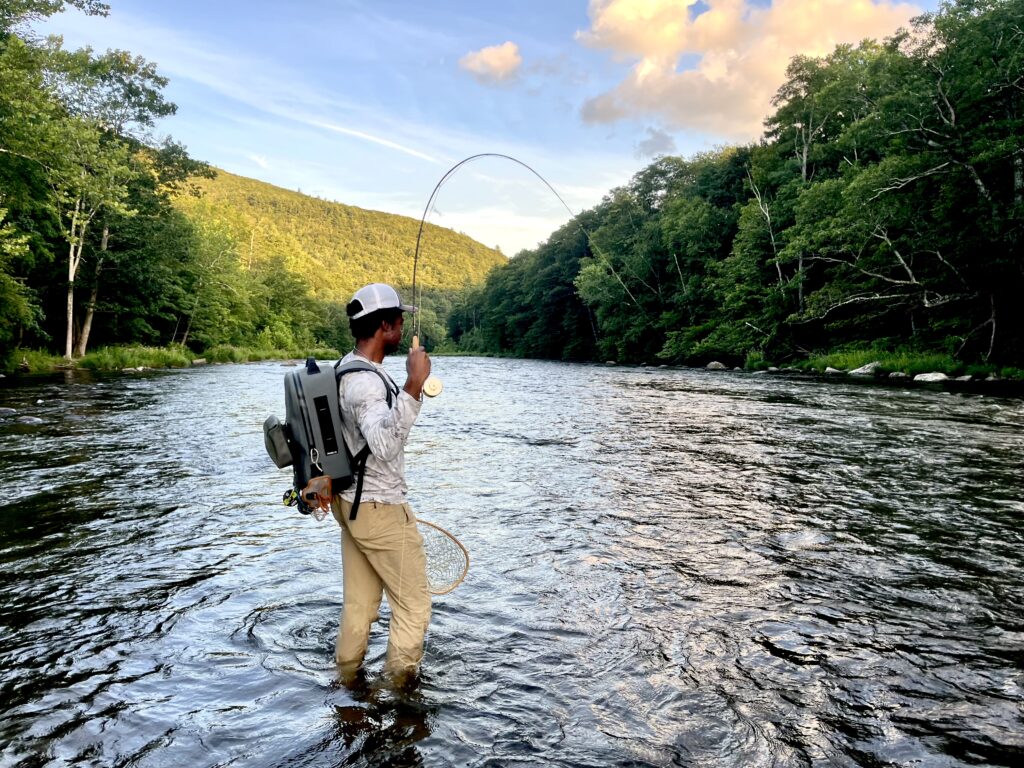
Amanda and I’s two beginner friends did not catch a fish that night. The itch I had for them to catch a fish would have to be scratched the following day. I went to bed with that in the back of my mind.
Evening Dry Fly Madness
After a day spent hiking (and admittedly some solo fishing), we returned to the same location the following evening. We decided to mainly fish dry flies, given that the fish were seemingly ready and willing to surface for them.
As we awaited sunset, we watched as the forest began to die down. Common mergansers were returning to their roosts by crossing the river, and the woods were getting quiet.
Suddenly, fish started hitting dry flies left and right. I cannot count the number of times I yelled “Set, set!”
After a bit of coaching, one of our friends hooked and landed her first rainbow trout. While she had caught several fish on my boat, this fish felt different, given the amount of work we had put into it.
It was not long before she hooked up a second time. Another rainbow. The action was on.
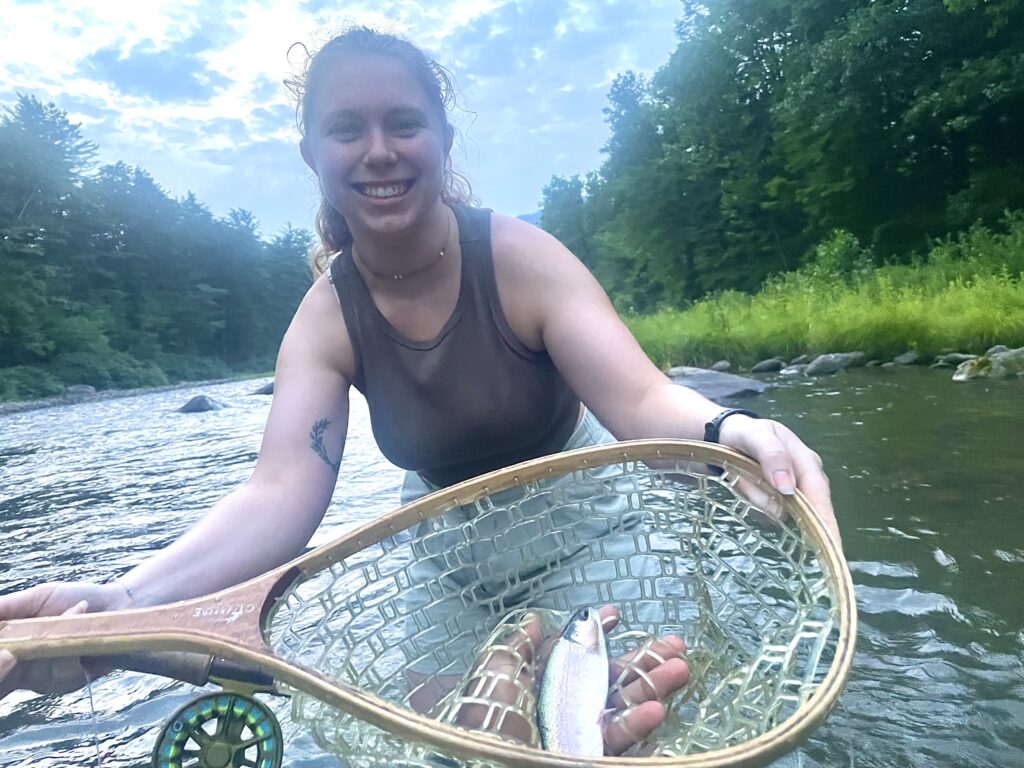
At that point, I shifted my focus to our other friend, who had been caught like a deer in the headlights on a couple of fish strikes.
As the sun continued to set, the fish only picked up their aggression towards her fly. Time after time, she hooked fish and dropped them. It became a gag as the evening progressed.
Eventually, the light was exchanged for darkness, and we were unable to put her on a fish. I am still thinking about that trip days later. What could have been done differently? How will we put her on a fish in the future?
The Next Steps
Overall, everyone who was on the water that day had a great time. While watching others land a fish is always my priority, it is not always the priority of the student.
To put it in the words of one of my friends, “I just want to do an activity outside, in the water, with my hands.” What a true statement that is, and it digs into the root of why so many of us are even out there in the first place.
I cannot wait to continue helping these ladies through their fly fishing journey. This trip was a great opportunity to watch Amanda be self-sufficient and go catch fish on her own while also watching beginners experience fly fishing for the first time.
We will certainly return to fish the Catskills, but the next step will be to put each of these ladies on a large fish this fall. Striped bass, here we come.